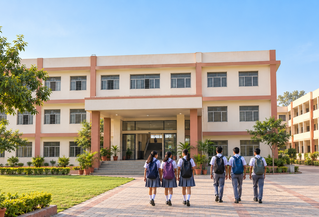
If you’ve begun to research boarding schools, you know the feeling. Their campus is “world-class” on one website. Another claims to be “Kerala’s No. 1”. Another has glossy photographs of a swimming pool that you may wonder if your child will ever use. After the fifth brochure, it all starts to blur together — and you’re no closer to knowing which school is actually right for your kid.
That is a common confusion. Choosing a boarding school is not like choosing a day school down the road where you can judge it on proximity and reputation. You’re choosing where your kid will eat, sleep, learn, make friends and grow up for a big chunk of the year. It deserves better than a glossy prospectus.
So, instead of another list of “top 10 schools”, here’s a practical checklist – the kind of questions we’d want answered if we were the ones filling out the admission form.
Begin with the reason you’re even considering boarding in the first place.
Before you start comparing one school to another, it helps to be honest with yourself about why. Are you searching for:
- More structure to your child’s day than they’re getting at home right now?
- More exposure to sports, arts or leadership opportunities?
- A more supervised, safer environment, in a time when you’re worried about outside influences?
- A strong CBSE academic track record with little diversion?
There are no wrong answers here. But knowing your “why” will help you weed out schools that look good on paper but don’t actually solve the problem you’re trying to solve.
1. Check the CBSE affiliation — and what that means
All schools will mention “CBSE affiliated” somewhere on their home page. Go one level deeper:
- Is it a permanent or a temporary affiliation? Provisional affiliations require periodic renewal and can lapse if the school does not meet requirements.
- What is the affiliation number? A real school will have this on display (usually in the footer or a “mandatory disclosure” page) – you can check it right on the CBSE website.
- Does the school follow the CBSE curriculum for all levels, right from primary to Class 12? Some schools only offer boarding from a certain grade, which is important if you are planning for the younger children.
2. Experience the hostel, not just the classroom
Living in a hostel is one thing, and seeing pictures of a hostel is another. If you can, go in person and ask to see:
- The actual room your child would sleep in, not a “model room” for visitors
- Student-to-washroom ratio
- Distance from hostel to dining hall, infirmary and classrooms
- Typical day (wake up, study time, free time, lights out)
If you can’t view it in person, ask for a video tour. A school that believes in its facilities will give you a real tour without hesitation.
3. Ask about health and emergency care before you need it
This is the one that parents often forget to ask about until something happens. What to find out:
- Is there a resident doctor or nurse, or only on-call medical care?
- How close is the nearest hospital, and is there a tie-up for emergencies with the school?
- What really goes on when a child gets sick at 2 AM? Who calls who, and how soon are parents informed?
A school with a proper infirmary and a clear emergency protocol is telling you something important about how seriously they take day-to-day student welfare, not just academic results. For example, at MES Raja Residential School this is one of the first things we take parents through when they are on a campus visit – because it is usually the question that matters the most once the excitement of admission day is over.
4. Know who is really taking care of your child daily
Teachers run classrooms. Wardens and house-parents deal with everything else – homesickness, friendships, discipline, bedtime. Ask:
- Hostel-warden student ratio?
- Are wardens trained in pastoral care or are they teachers doing double duty?
- How does the school communicate with parents if there is a behavioural or emotional issue and not just an academic one?
This is often the difference between a child settling in within weeks or struggling silently for months.
5. Go beyond the sports complex – ask what a typical week looks like
Every boarding school will boast its playgrounds and laboratories. But more important is the pace of a typical week:
- How much free, unstructured time does a kid actually have?
- How many extracurriculars can a student realistically pursue along with academics? Are they mandatory or optional?
- How does the exam period work – is there some leeway, or does the routine stay rigid regardless of stress?
6. Speak with existing parents, not just the admissions team
If you ask for references, every school will give you their happiest families; that’s fair, that’s marketing. But you can take it a step further:
- Look at independent parent reviews, not just testimonials on the school’s own website.
- Ask around if you know any locals – the Kerala boarding school community is smaller and closer than you’d think.
- If you do talk to a parent, ask pointed questions; “What would you change about this school if you could?” tells you more than “Are you happy here?”
7. Know all the fees – and what’s notcovered
Fees for boarding schools can be confusing, with separate items shown for tuition, hostel charges, food, uniforms, transport and “miscellaneous”. Ask for this before you sign:
- Itemised, detailed breakdown of fees for one full year
- How often fees increase and how much on average historically
- What exactly is covered by “hostel fees” – does this include laundry? Weekend food? Medical consults?
If a school is honest about costs, down to the smaller line items, it is generally a school that is honest about everything else too.
A checklist you can really use
Before short-listing a school, make sure you have clear answers to:
- Is CBSE affiliation permanent and verifiable?
- Did you see real hostel rooms and not just a model unit?
- Is there a medical facility on site, and what is the emergency procedure?
- What is the student-to-warden ratio, and are they trained in pastoral care?
- What does a typical week look like (not just the highlight reel)?
- Have you talked to a current parent (not just the admissions office)?
- Do you have a full line-itemed fee schedule for the year?
The conclusion is
There’s no “best” boarding school in Kerala – there’s the school that’s the best fit for your child, your priorities, your family’s comfort level with letting go a little. After a while, all the glossy brochures will begin to blur together. What will be different is how a school responds to the tougher questions — on hostel life, health emergencies and what a regular Tuesday is really like for a boarder.
Take your time in deciding this. If you can, go. Ask the hard questions. And trust the answers you get more than the pictures you see.
If you are in this process now, you are welcome to come to our campus at MES Raja Residential School and put us through this very checklist — we would rather have you ask the hard questions now than wonder about the answers later.