- mesrajac@gmail.com
- +91 495 228 7250
- Mon - Sat : 09.00 AM-05.00 PM
- MES Raja Residential School Kalanthodu, Nit Campus (Po), Calicut (Dt.), Kerala - 673601
- +914952287257
- mesrajac@gmail.com
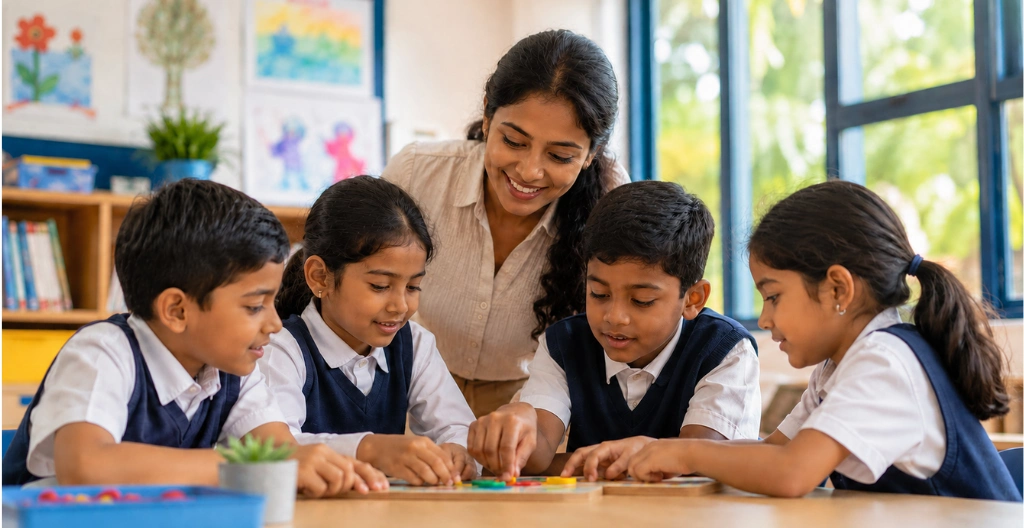
Education isn’t just about textbooks, examinations and marks. While children are growing up they spend a lot of time in school. Their day to day experiences impact on how they think, talk, behave and react to the world they live in.
A good school gives children the opportunity to learn responsibility, confidence, discipline, teamwork and respect for others. This is why choosing the right learning environment is important for parents who want their children to develop academically and personally.
If you are a parent looking for a CBSE boarding school in Kerala, gaining an insight into how school life contributes to personality and character development will help you to make a more informed choice.
Why is personality development necessary for kids?
Personality development is the gradual growth of a child’s behavior, communication, confidence, attitudes, values and social skills.
Family plays a major role in a child’s early development, but school introduces children to a wider social environment. They meet classmates of different backgrounds, interact with teachers, participate in activities, face challenges and learn how to make decisions independently.
These everyday experiences can help children to be more confident, responsible and socially aware.
1. Developing Confidence and Self-Esteem
When children are given opportunities to express themselves and find out what they can do, confidence grows.
Classroom discussions, presentations, competitions, sports, arts and other school activities encourage students to participate rather than being passive learners.
Teachers can also play an important role by appreciating effort, encouraging improvement, and helping children learn from mistakes. Over time, these experiences can help students become more comfortable with expressing their ideas and taking on new challenges.
2. Discipline and Responsibility in Teaching
School teaches children routines, deadlines and responsibilities.
Discipline is the quality that helps you get to class on time, to do your homework, to take care of your belongings, to study for tests and work in groups.
In a residential learning environment, students may have more opportunities to develop these habits as they learn to manage both their academic and daily routines with appropriate guidance.
For students studying in a CBSE boarding school in Kerala, this structured environment can foster independence, time management and personal responsibility.
3. Building Communication Skills
Communication is a good life skill.
Children at school interact with teachers, their peers, their seniors and others in the school community. Speaking and listening skills can be developed through classroom discussions, group projects, debates, cultural programs and everyday conversation.
Students learn to state their opinions clearly, step by step, and also learn to listen to and respect the opinions of others.
These skills can support them throughout higher education, future careers and personal relationships.
4. Developing Teamwork and Cooperation
Children cannot learn all the life skills from textbooks.
Team sports, group projects, clubs, cultural programs and school events teach students how to work with others toward a common goal.
Children learn to share responsibilities, listen to different opinions, solve disagreements and support their peers through teamwork.
They also begin to learn an important lesson: success is not always a solo accomplishment. Sometimes it is contingent upon how well people work together.
5. Building Leadership Skills
There are many opportunities for children to take responsibility in schools.
A student may lead a project, represent a class, organize an activity, captain a sports team or assist younger students.
Small responsibilities can also teach valuable lessons about decision-making, accountability and initiative.
School leadership is not about control.” It’s about learning to communicate, make sensible decisions, support others and accept responsibility for the consequences.
6. Developing Sound Values And Character
“Education has a role in helping children understand values, academic achievement is important.
Everyday interactions reinforce honesty, kindness, respect, empathy, fairness and responsibility.
Children learn that what they do has consequences for other people. They learn to respect rules, to appreciate differences and to understand why responsible behavior is important.
Therefore, a supportive school culture can help students to develop not only knowledge, but also the character to use that knowledge responsibly.
7. Becoming Independent
As they grow, children need opportunities to make independent choices appropriate to their age.
This is especially true for boarding and residential education. Students’ capacity to organize their daily activities, manage their time, care for their belongings and deal with common problems develops gradually.
They still get help from teachers and school staff, but they also learn they are responsible for many of their own choices.
This mix of guidance and independence can help prepare students for further education and adult life.
8. How Sports and Extracurricular Activities Shape Personality
Personality development does not happen only in the classroom.
Sports teach discipline, perseverance and teamwork. The arts and culture activities encourage creativity and self-expression. Clubs and competitions can help children find interests and talents that may not always be apparent through academic performance.
Winning can build confidence, and losing can teach students how to deal with disappointment, reflect and try again.
This is why parents selecting a school should look at the opportunities outside academics as well.
9. Learning to Cooperate and Grow With Others
One of the greatest values of school life is learning to be part of a community.
Students meet people with varied personalities, abilities, interests and backgrounds. Such experiences can promote patience, flexibility and respect.
Residential schools can provide even more opportunities for such interaction, as students learn, participate in activities and live their daily lives together as part of a shared community.
This can help children be more socially confident and comfortable working with different types of people.
10. Getting Children Ready for Life After School
Ultimately, education should be about preparing children for more than examinations.
Academic knowledge forms an important foundation but qualities such as confidence, communication, resilience, discipline, empathy, leadership and independent thinking can affect how effectively a young person might deal with future challenges.
The balanced school environment provides opportunities for students to develop these qualities as well as their academic learning.
Raja Residential School: A Support for Holistic Development
At MES Raja Residential School, education is more than simply academic success. The school provides CBSE education and opportunities for character building, leadership, sports, arts, cultural activities and residential learning.
Students are provided with academic facilities, science laboratories, sports and extra-curricular opportunities and the residential environment provides space for students to develop independence, responsibility and social skills.
For parents looking for a CBSE boarding school in Kerala, this balance of academic learning and overall development is an essential factor to consider when choosing the right educational environment for their child.
Choosing a School That Supports Your Child
Every child has a different personality. Strength and potential. The goal of a good school is not to make every student the same but to create an environment in which each child can learn, explore interests, build confidence and gradually become more responsible.
So parents should look beyond exam results when they are choosing a school. Academic standards matter but so do the school’s values, its teachers, its residential environment, its extracurricular opportunities, its student support and its approach to character development.
The right school can be an important partner in helping a child to grow into a confident, capable and responsible individual.
Frequently Asked Questions
How does school contribute to the development of personality?
School gives children opportunities to communicate, collaborate, take responsibility, participate in activities and solve problems. These experiences can build confidence, discipline, social skills and independence.
Why are the extracurricular activities important for the personality development?
Sports, arts, clubs and cultural activities enable children to explore their interests while developing teamwork, creativity, leadership, perseverance and communication skills.
Does boarding school make children independent?
A well-supported boarding environment can provide students with opportunities to manage routines, organize their time and take age-appropriate responsibility for everyday tasks, helping them gradually develop greater independence.
Things to consider while selecting a CBSE boarding school in Kerala for your child
Parents should check for academic quality, CBSE affiliation, teaching standards, residential facilities, safety, student support, extracurricular activities, sports, values and overall development opportunities.
Schools are very important in molding a child’s personality and character. The lessons children learn from friendships, responsibilities, activities, challenges and everyday school experiences can be valuable long after they leave the classroom.
A supportive CBSE boarding school in Kerala can blend academic learning with opportunities for personal development and help students build the knowledge, confidence, values and life skills they need for the future.

Dedicated to providing world-class education with a focus on moral integrity and academic excellence. As one of the leading CBSE boarding schools in Kerala and a trusted CBSE school in Calicut, our campus fosters a nurturing environment where students learn, lead, and innovate. Empowering young minds since 1974.
Contact Us
- Kalanthodu, Nit Campus (Po) Calicut (Dt.), Kerala - 673601 Affiliation No: 930007
- +91 495 228 7250
- +91 953 987 2111
Links
Accreditation